Article 10 : Durability Differences of Jewelry Materials
Last updated: 18 Mar 2025
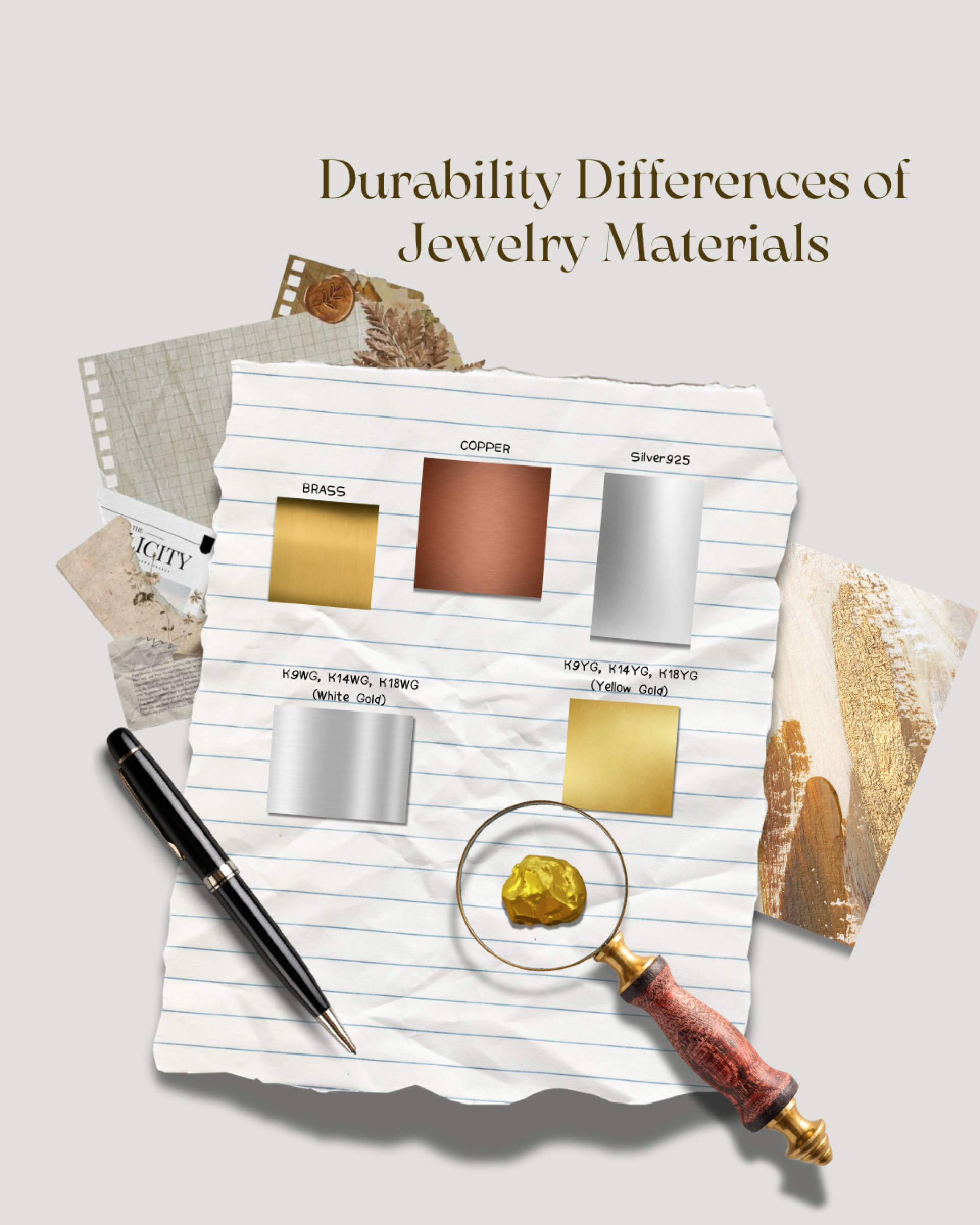
Durability Differences of Jewelry Materials
| Type | Durability | Care |
| Brass | Fairly durable but prone to oxidation, which can cause tarnishing over time when exposed to air and moisture. | Keep it dry, avoid exposure to chemicals, and clean it regularly to prevent tarnish. |
| Copper | Less resistant to corrosion; develops a green patina when exposed to air and sweat. | Often coated or plated with other metals to prevent tarnishing. Regular cleaning helps maintain its appearance. |
| Silver925 | Moderately durable but tarnishes over time when exposed to air or chemicals. | Store in airtight containers, use a silver polishing cloth, and avoid prolonged exposure to moisture. |
|
K9WG, K14WG, K18WG (White Gold) |
Highly resistant to tarnish and corrosion, but the rhodium plating can wear off over time. | May require re-plating to maintain its bright, white appearance. Avoid harsh chemicals. |
| K9YG, K14YG, K18YG (Yellow Gold) | Extremely durable and does not tarnish or rust. However, pure gold is soft and may scratch easily. | Avoid scratching by storing separately from other jewelry and cleaning with a soft cloth. |
| Among these materials, yellow gold and white gold offer the highest durability for long-term use, while brass and copper require more maintenance due to oxidation and tarnishing. |
Related Content

Differences in raw materials used to make jewelry

Pearl jewelry has long been associated with luxury and formality, but today, it has become a versatile fashion staple that can be worn in everyday life. The current trend of wearing pearls embraces various styles, from minimalistic looks to bold street fashion.
The price of raw materials used to make jewelry